
Many people wake up with stiff hips, lower-back tension, or restless sleep without realizing that their sleeping posture may be the cause. For side sleepers in particular, the way the legs rest during the night can influence spinal alignment and overall comfort.
You are not alone if you often shift positions, wake up with sore muscles, or struggle to stay comfortable on your side. Through practical sleep-coaching experience, I have seen that small adjustments in pillow placement can noticeably improve how the body rests overnight.
One of the simplest techniques is placing a pillow between the legs while sleeping. This small change may help support natural alignment, reduce joint pressure, and improve side-sleeping stability.
Direct answer: Sleeping with a pillow between your legs may help keep your spine aligned, reduce pressure on hips and knees, and support a more balanced side-sleeping posture. It may improve overnight comfort and reduce morning stiffness for some people. Results vary depending on body shape, mattress firmness, and pillow type.
Key Benefits for Side Sleepers

For side sleepers, the upper leg often drops forward during sleep. This small shift can rotate the hips and place additional strain on the lower back. Placing a pillow between the legs creates gentle spacing that helps keep the body more balanced.
This small habit can bring several potential comfort benefits:
- Better spine alignment: Keeps the hips stacked so the spine stays closer to its natural position.
- Reduced joint pressure: Prevents the knees and thighs from pressing together.
- Improved sleeping stability: Helps maintain a comfortable side position longer.
- Relaxed muscles: May reduce overnight tension in the hips and lower back.
When the body stays more balanced during sleep, many people notice fewer position changes and more consistent rest.
Because the pillow stays in close contact with your legs throughout the night, good hygiene is important. It helps to wash your pillows regularly to prevent sweat, oil buildup, and odor.
How It May Help Lower Back Pain
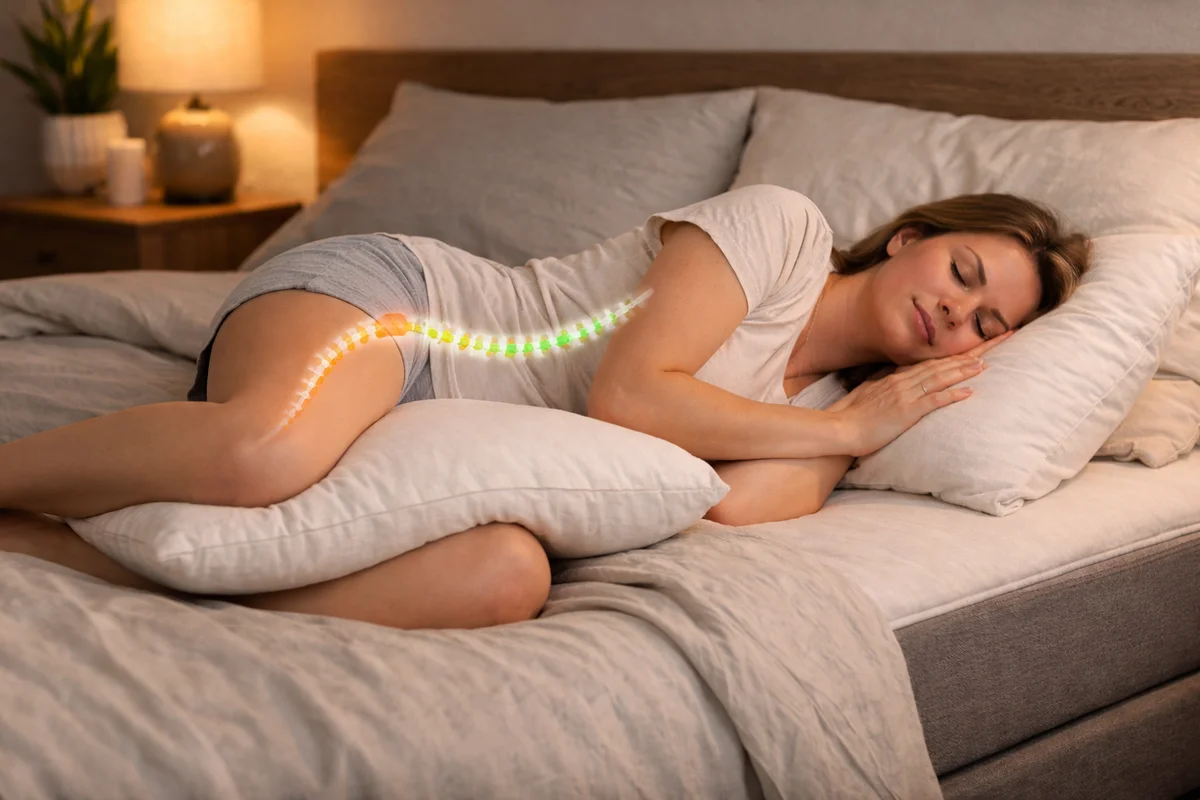
Lower-back discomfort is common among people who sleep on their side. When the top leg drops forward without support, the hips rotate and the spine may twist slightly out of alignment.
A pillow placed between the knees acts as a gentle spacer. It helps keep the hips stacked vertically and encourages a more neutral position for the lower back.
This alignment may reduce pressure on the lumbar area during the night. For some sleepers, it can lead to less stiffness or tightness when waking up.
However, it is important to understand that this technique is not a medical treatment. If pain is persistent, severe, or worsening, it is best to consult a qualified healthcare professional.
Comfort also depends on using a clean pillow. If your pillow develops an unpleasant odor after washing, you may want to review this guide to remove pillow odors before continuing regular use.
Benefits During Pregnancy
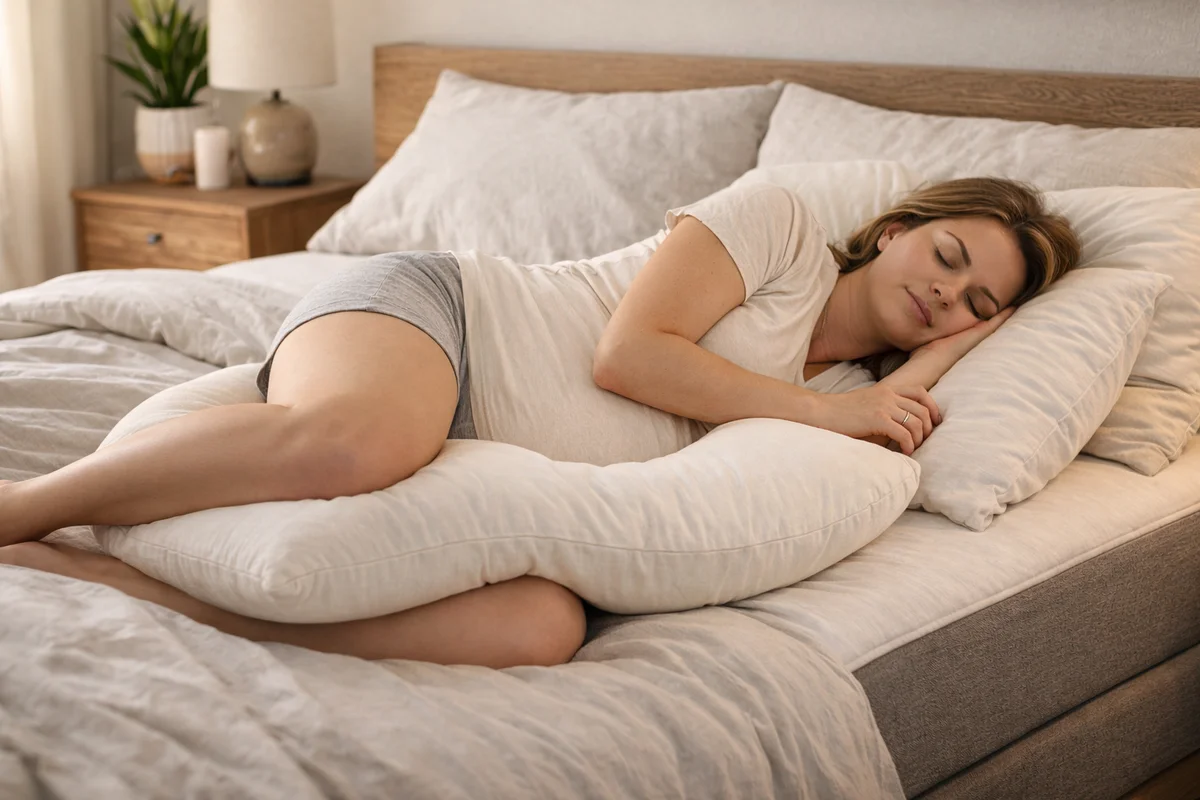
During pregnancy, many people find that side sleeping becomes more comfortable than sleeping on the back. As the body changes, additional support around the hips and legs can make a noticeable difference.
A pillow placed between the legs may help provide gentle support and improve stability while resting on the side.
Possible benefits include:
- Reduced pressure on the lower back
- More balanced hip positioning
- Less strain on the pelvis
- Greater overall comfort while resting
Some people prefer using a long body pillow instead of a small pillow between the knees. These pillows support multiple areas of the body at once.
You can learn more about this option in this guide on using body pillows for sleep.
Note: Pregnancy needs can vary greatly from person to person. Always follow guidance from your healthcare provider for personalized sleep recommendations.
How to Use a Pillow Between Your Legs Correctly
Placement is important. If the pillow sits too low or too high, it may not provide proper support.
Follow these simple steps to position it correctly:
- Lie on your side with your shoulders and hips aligned.
- Place the pillow fully between both knees.
- Allow the pillow to support the upper leg comfortably.
- Keep your neck supported with a suitable head pillow.
The pillow should feel supportive but not overly stiff. Many people prefer memory foam or firm fiberfill because they maintain shape during the night.
If you are unsure which material works best, compare common pillow materials in this memory foam vs latex guide.
Over time, pillows naturally lose loft. Learning how to fluff pillows properly can help maintain support and extend their useful life.
Common Myths and Concerns
There are several misunderstandings about sleeping with a pillow between your legs. Let us clarify a few of the most common ones.
Does it make you taller?
No. Sleeping with a pillow between your legs does not increase height. It simply supports posture during sleep and may improve comfort.
Can it cause hip pain?
If the pillow is extremely thick or too thin, it may feel uncomfortable. Choosing a pillow that keeps the hips level usually provides better support.
Is it unhealthy?
For most people, this sleeping technique is considered safe and commonly recommended for side sleepers who want improved alignment.
If your pillow feels worn out, dirty, or irritating, review signs of an unhealthy old pillow and replace it when necessary.
Final Thoughts: Is It Worth Trying?
Sleeping with a pillow between your legs is a simple adjustment that may improve comfort, posture, and overnight stability for many side sleepers.
While it is not a cure-all solution, it can help support natural alignment and reduce pressure on the hips and lower back.
Better sleep also depends on mattress quality, pillow condition, and healthy bedtime habits. Paying attention to these small factors can make a noticeable difference over time.
For best results, keep your pillows clean and supportive. Follow this washing guide and replace worn pillows when they no longer provide proper support.
Q: Is it healthy to sleep with a pillow between your legs?
Ans: For most side sleepers, it is generally safe and may support better alignment and comfort. A pillow between the legs can reduce joint pressure and improve stability. However, comfort is personal, and results depend on pillow thickness, mattress support, and sleeping habits.
Q: Why do people put pillows between their thighs?
Ans: People use pillows between their thighs to reduce friction, balance the hips, and keep the spine in a more neutral position. This placement may help minimize tossing, ease muscle tension, and make side sleeping feel more stable and relaxed.
Q: Can sleeping with a pillow between your legs help your back?
Ans: It may help some people by keeping the hips aligned and reducing twisting of the lower spine. This can lower strain during sleep. However, it is not a medical treatment, and ongoing pain should be discussed with a qualified professional.
Q: What is the 2 2 1 pillow rule?
Ans: The 2 2 1 rule usually means two pillows for the head, two for body support, and one between the legs. It is a comfort-based approach used by some sleepers to improve alignment, but it is optional and should be adapted to personal needs.