
If you wake up with stiff hips, lower back tightness, or restless sleep, your side-sleeping posture may be contributing to the problem. Many side sleepers struggle with subtle spinal twisting during the night without realizing it.
You are not alone. Through practical sleep coaching experience and real-world observation, I have seen how small posture adjustments—especially pillow placement—can significantly improve overnight comfort.
In this guide, you will learn how sleeping with a pillow between your legs may improve spinal alignment, reduce joint pressure, and promote more stable side sleeping. We will also cover correct placement, common mistakes, pregnancy considerations, and when this method may not help.
Direct answer: Sleeping with a pillow between your legs may help keep your spine aligned, reduce hip pressure, and support a more neutral side-sleeping posture. It can improve comfort and reduce morning stiffness for some people. Results depend on mattress firmness, body type, pillow thickness, and sleep habits.
Key Benefits for Side Sleepers

When you sleep on your side, gravity naturally pulls your top leg forward. This can rotate your pelvis and slightly twist your lower spine. Over several hours, that rotation may contribute to muscle tension and discomfort.
Placing a pillow between your knees acts as a spacer, helping keep your hips stacked and your spine in a more neutral position.
- Improved spinal alignment: Reduces forward hip rotation.
- Lower joint friction: Prevents knees and thighs from pressing together.
- Greater sleep stability: Helps maintain one comfortable position longer.
- Reduced muscle strain: May decrease overnight tension in hips and lower back.
Better alignment often leads to fewer nighttime adjustments, which may support deeper, less interrupted sleep cycles.
Because your legs and pillow stay in close contact throughout the night, hygiene matters. It helps to wash your pillows regularly to prevent sweat and oil buildup.
How It May Help Lower Back Pain
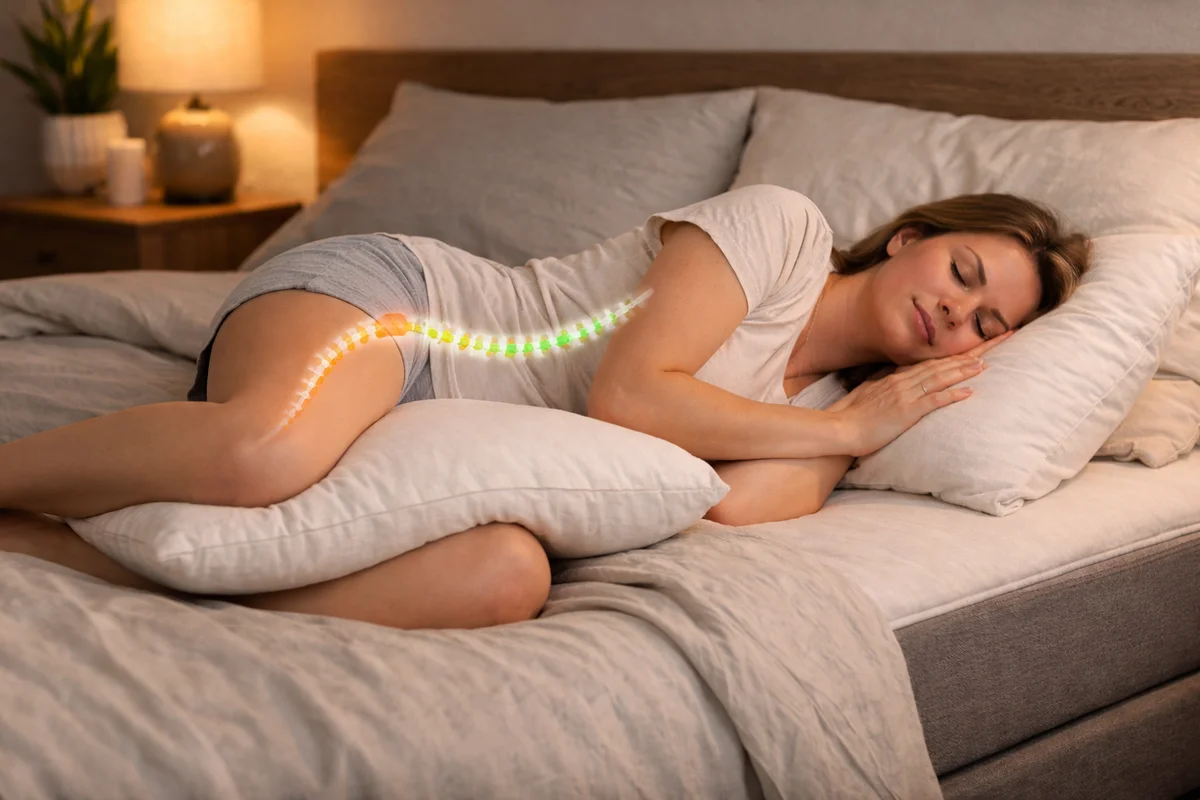
Lower back discomfort among side sleepers is often linked to uneven pelvic positioning. When the top leg drops forward, it can pull the lumbar spine slightly out of alignment.
A properly sized pillow between the knees helps keep the pelvis balanced. This may reduce strain on the lumbar region over time.
However, this is not a medical treatment. Persistent or severe back pain should be evaluated by a qualified healthcare professional. Sleep posture adjustments can support comfort, but they do not replace clinical care.
Also consider mattress firmness. If a mattress is too soft, hips may sink unevenly even with a pillow. If it is too firm, pressure points may increase.
If your pillow smells or feels damp, address that first. Moisture and odor can affect comfort and hygiene. Follow this guide to remove pillow odors before regular nightly use.
Benefits During Pregnancy
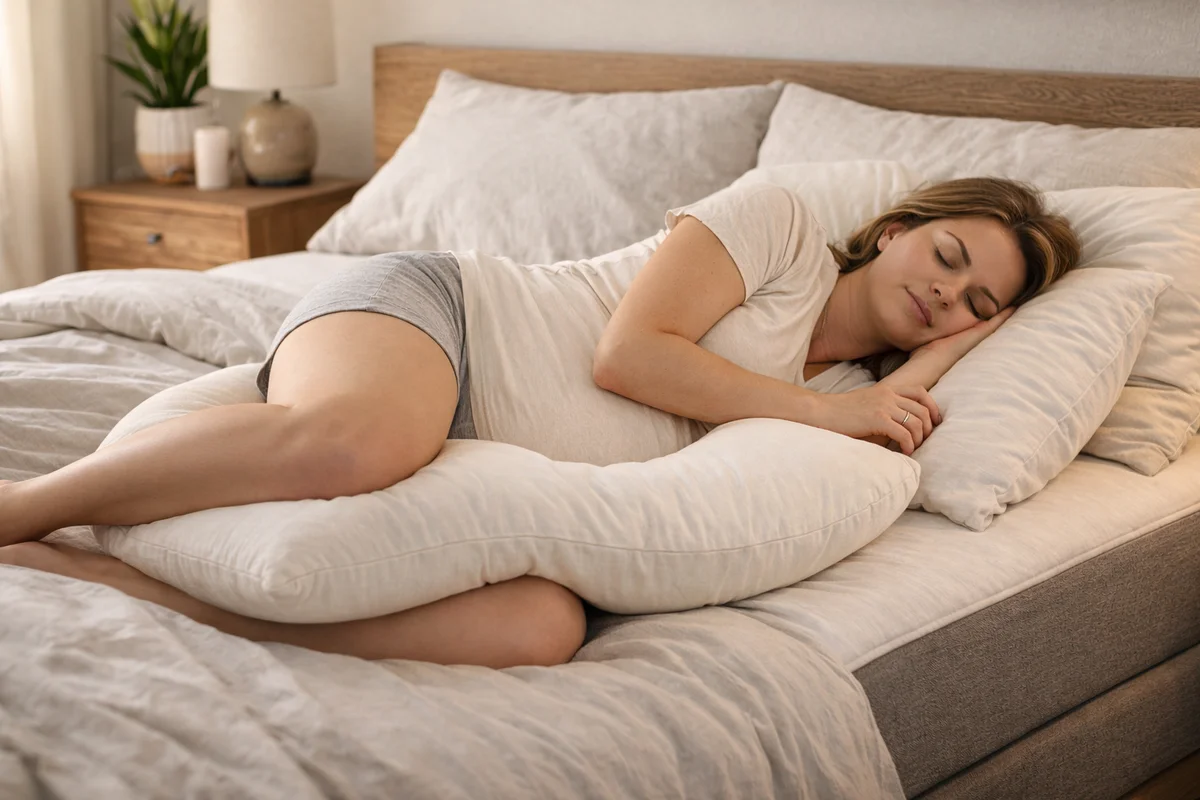
During pregnancy, side sleeping—particularly on the left side—is often recommended for comfort and circulation support. As the body changes, hip and lower back pressure may increase.
A pillow between the legs may help:
- Reduce lower back pressure
- Support pelvic alignment
- Improve side-sleeping stability
- Minimize hip strain
Some pregnant sleepers prefer full-length support for both knees and abdomen. You can explore options in this guide on using body pillows for sleep.
Important: Always follow advice from your healthcare provider during pregnancy. Individual needs vary.
How to Use a Pillow Between Your Legs Correctly
Correct placement makes a noticeable difference. Improper positioning can reduce benefits.
- Lie fully on your side with shoulders and hips aligned vertically.
- Place the pillow completely between both knees.
- Ensure the upper leg rests comfortably on the pillow.
- Keep ankles aligned rather than twisting forward.
- Use a supportive head pillow to maintain neck alignment.
Thickness guideline: Your hips should feel neutral—not tilted forward or backward. If your top knee drops downward, the pillow is too thin. If your hips feel forced apart, it may be too thick.
Memory foam or firm fiberfill pillows often provide stable support. If unsure about materials, compare options in this memory foam vs latex guide.
Over time, pillows flatten and lose resilience. Knowing how to fluff pillows properly can restore shape and extend usability.
Common Myths and Concerns
Does it make you taller?
No. This method does not increase height. It simply supports temporary spinal alignment during sleep.
Can it cause hip pain?
If the pillow thickness does not match your body proportions, discomfort may occur. Adjust thickness until your hips feel balanced and relaxed.
Is it unhealthy?
For most people, it is safe. Comfort preferences vary, and posture needs are individual. Listen to your body’s response over several nights.
Do you need a special pillow?
Not necessarily. A standard firm pillow may work. Some sleepers prefer knee-specific or contoured pillows for improved stability.
If your pillow feels worn or irritating, review signs of an unhealthy old pillow and replace it when needed.
When It May Not Help
While helpful for many side sleepers, this technique may not solve every discomfort issue.
- If your mattress lacks support
- If you frequently switch sleep positions
- If pain is caused by an underlying medical condition
- If the pillow compresses too quickly overnight
In such cases, broader sleep setup adjustments may be necessary.
Final Thoughts: Is It Worth Trying?
Sleeping with a pillow between your legs is a simple, low-risk adjustment that may improve spinal alignment, reduce joint pressure, and enhance side-sleeping comfort.
It works best when combined with a supportive mattress, proper neck alignment, and good pillow hygiene.
Small posture improvements often produce noticeable changes over time. Try it consistently for several nights and observe how your body responds.
For long-term comfort, maintain pillow cleanliness by following this washing guide and replace flattened pillows when they no longer provide adequate support.
Q: Is it healthy to sleep with a pillow between your legs?
Ans: For most side sleepers, it is generally safe and may support better alignment and comfort. A pillow between the legs can reduce joint pressure and improve stability. However, comfort is personal, and results depend on pillow thickness, mattress support, and sleeping habits.
Q: Why do people put pillows between their thighs?
Ans: People use pillows between their thighs to reduce friction, balance the hips, and keep the spine in a more neutral position. This placement may help minimize tossing, ease muscle tension, and make side sleeping feel more stable and relaxed.
Q: Can sleeping with a pillow between your legs help your back?
Ans: It may help some people by keeping the hips aligned and reducing twisting of the lower spine. This can lower strain during sleep. However, it is not a medical treatment, and ongoing pain should be discussed with a qualified professional.
Q: What is the 2 2 1 pillow rule?
Ans: The 2 2 1 rule usually means two pillows for the head, two for body support, and one between the legs. It is a comfort-based approach used by some sleepers to improve alignment, but it is optional and should be adapted to personal needs.