
You’ve just washed your pillows. Now they’re heavy, damp, and taking forever to dry. Instead of feeling fresh and clean, they feel uncomfortable, cold, and risky to use.
You may find yourself wondering, “Will this ever dry properly?” In humid weather or small homes, this problem becomes even more frustrating. Many people worry about bad smells, mold, or permanently damaged filling.
In this complete guide, I’ll walk you through safe, proven ways to dry pillows without a dryer. These techniques are based on real-life experience and long-term pillow care practices.
Quick Answer: To dry pillows without a dryer, gently squeeze out excess water, place them in a well-ventilated sunny or breezy area, flip every few hours, and fluff regularly. Using fans, towels, and steady airflow can cut drying time in half while preventing odors and mildew.
Air-Drying Pillows Safely Outdoors
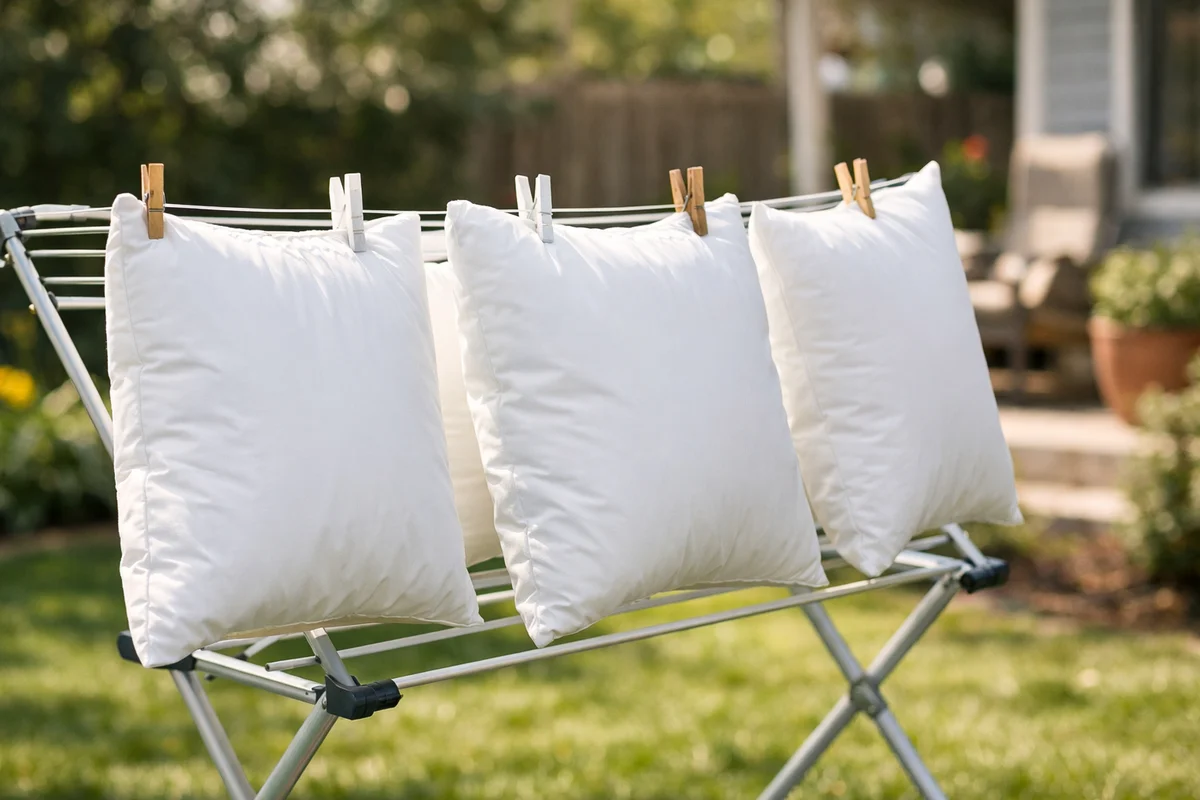
Outdoor air-drying is one of the most effective natural methods. Sunlight and moving air work together to remove deep moisture from inside the filling.
Step-by-Step Outdoor Method
- Press out excess water gently. Never twist or wring.
- Place pillows on a clean drying rack or clothesline.
- Choose a sunny, breezy location.
- Flip every 2–3 hours.
- Bring pillows inside before evening dew.
Sunlight also helps reduce bacteria and mild odors. If discoloration appears, read about why pillows turn yellow and how to clean them.
Expert Tip: In extreme heat, limit direct sun exposure for memory foam. High temperatures can weaken foam structure.
How to Speed Up Indoor Drying
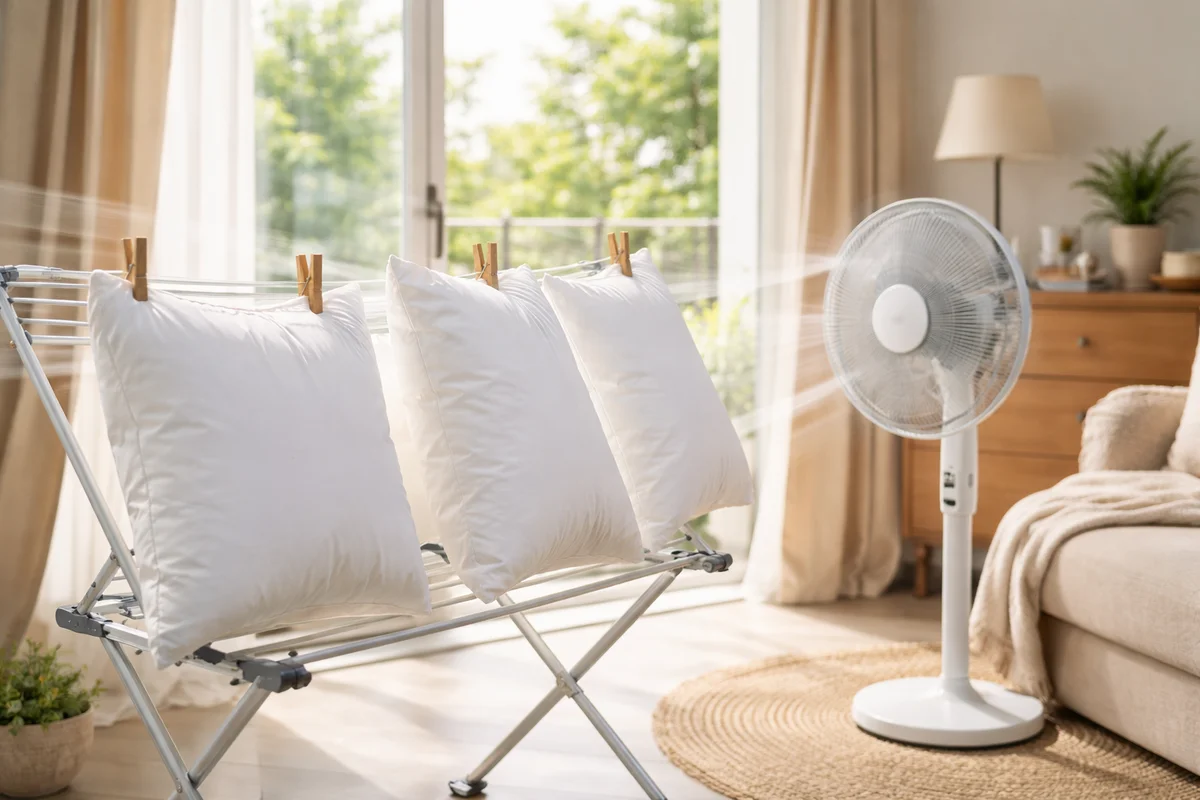
When outdoor drying isn’t possible, indoor airflow becomes the most important factor.
Best Indoor Drying Setup
- Place pillows near open windows.
- Use standing or ceiling fans.
- Lay pillows on breathable surfaces.
- Rotate every 1–2 hours.
Try the towel-press method: sandwich the pillow between two dry towels and press firmly to remove trapped moisture.
If odors develop, see this guide on removing odors after washing.
Real-Life Example: In small apartments, positioning pillows on chairs facing a fan often dries fiber pillows within 24 hours.
Drying by Pillow Material
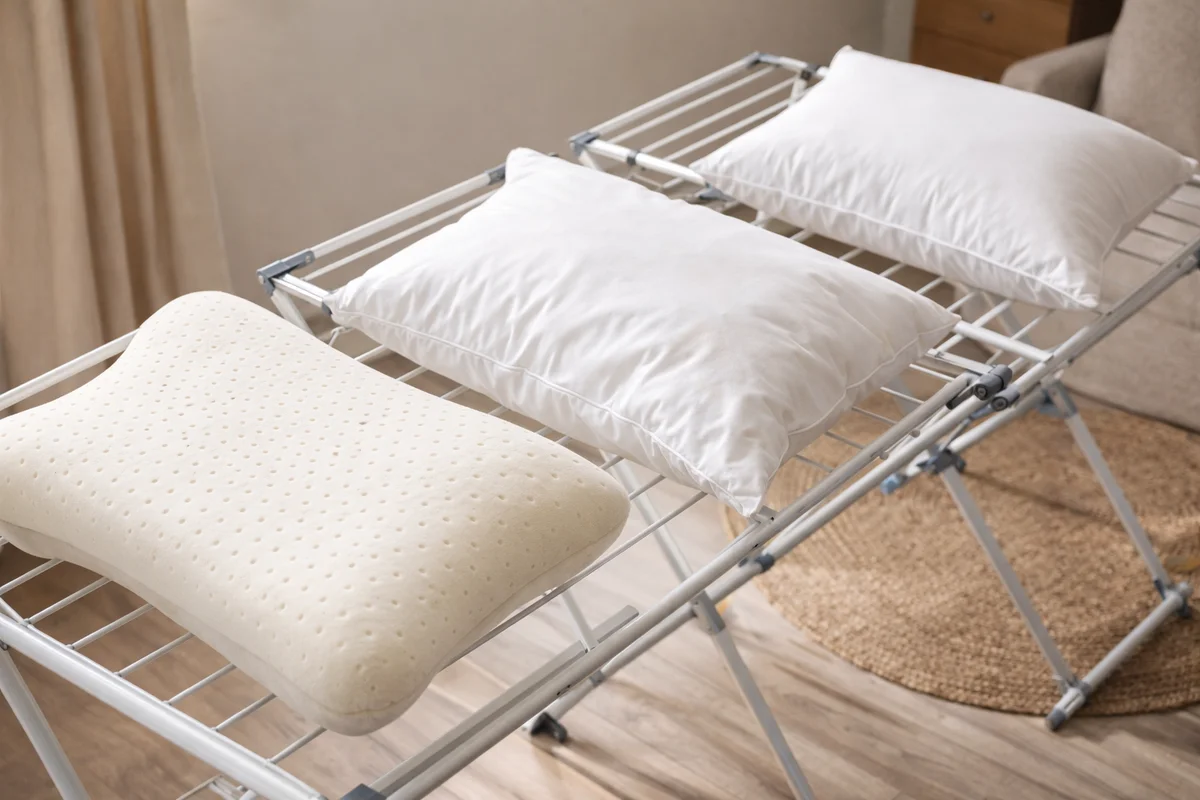
Different pillow fillings hold moisture differently. Treating all pillows the same may cause permanent damage.
Memory Foam Pillows
Memory foam should never be soaked. After surface cleaning, lay flat in shade with strong airflow. See this memory foam cleaning guide.
Down and Feather Pillows
These absorb water deeply and require 24–48 hours to dry. Fluff frequently and confirm internal dryness. Compare materials in this down vs feather review.
Polyester and Fiberfill Pillows
These dry fastest. With good airflow, they often dry within one day. Regular fluffing improves shape. Learn more in this fluffing guide.
Latex Pillows
Latex should be dried away from heat and sunlight. Use fans and patience. Avoid hanging to prevent stretching.
Common Drying Mistakes to Avoid
Most pillow damage happens due to small but repeated drying errors.
- Storing too early: Dampness encourages mildew.
- No airflow: Still air traps moisture.
- Direct heat: Hair dryers and heaters damage filling.
- No flipping: Uneven drying causes odor.
- Overcrowding: Drying multiple pillows too close slows evaporation.
Long-term moisture may affect hygiene. Read old pillows and health risks.
Proper washing reduces moisture retention. See this washing machine guide.
Drying Time Comparison by Pillow Material
| Pillow Type | Average Drying Time | Heat Safe | Odor Risk |
|---|---|---|---|
| Polyester/Fiberfill | 12–24 Hours | Yes (Low) | Low |
| Down/Feather | 24–48 Hours | Limited | Medium |
| Memory Foam | 24–36 Hours | No | High |
| Latex | 24–48 Hours | No | Medium |
When a Dryer Becomes Necessary
During rainy seasons or high humidity, air-drying may be too slow.
In such cases, a low-heat dryer cycle may be safer than prolonged dampness. Use gentle heat, pause regularly, and check internal dryness.
Never place memory foam or latex in standard dryers unless approved by the manufacturer.
For long-term care timing, see this washing frequency guide.
Ans: Yes, most pillows can air dry completely if there is good airflow and low humidity. Place them near windows or fans, flip them often, and allow at least 24 to 48 hours. Always check the inner filling before using to ensure no moisture remains. Ans: Most fiber pillows dry in about 12 to 24 hours, while down and feather pillows may take up to 48 hours. Drying time depends on humidity, airflow, and thickness. Using fans and regular flipping can shorten this time. Ans: To dry a pillow faster without heat, press out water with towels, place it in front of a fan, and rotate it every one to two hours. Positioning near open windows also improves airflow and speeds up evaporation. Ans: Odors usually happen when pillows stay damp too long. Slow drying allows bacteria to grow. Improving airflow, using sunlight briefly, and ensuring full dryness before storage can help prevent musty smells in the future. Ans: Yes, air drying is the safest method for memory foam. Lay the pillow flat in a shaded, well-ventilated area and avoid direct heat. While this takes longer, it helps preserve the foam’s structure and comfort.Q: Can I let my pillow air dry completely?
Q: How long do pillows take to dry naturally?
Q: How do I dry a pillow quickly without heat?
Q: Why do my pillows smell after air drying?
Q: Is air drying safe for memory foam pillows?
Final Thoughts: Keep Your Pillows Fresh and Dry
Drying pillows without a dryer requires patience, airflow, and consistency. Once mastered, it becomes part of a simple hygiene routine.
Fully dry pillows feel lighter, smell fresher, and last longer. Proper drying protects your sleep quality and your health.
If you notice stiffness or flattening, gentle fluffing and correct drying usually restore comfort.