
A friendly, practical guide from a sleep comfort perspective
You change your pillowcase often. You try to keep your bed clean. Yet one day, you notice yellow stains on your pillow—and it feels confusing and uncomfortable.
If you have ever wondered whether your pillow is still safe or if you are doing something wrong, you are not alone. Many people face this issue, even with good hygiene habits.
In this guide, I will explain why pillows turn yellow, how to clean them properly, and how to keep them fresh longer—based on real-life care practices and sleep hygiene experience.
Quick answer: Pillows usually turn yellow because of sweat, body oils, moisture, and skin products that soak into the fabric over time. You can often clean yellow stains using warm water, mild detergent, and gentle boosters like baking soda or vinegar. Regular washing and proper drying help prevent discoloration.
Why Do Pillows Turn Yellow Over Time
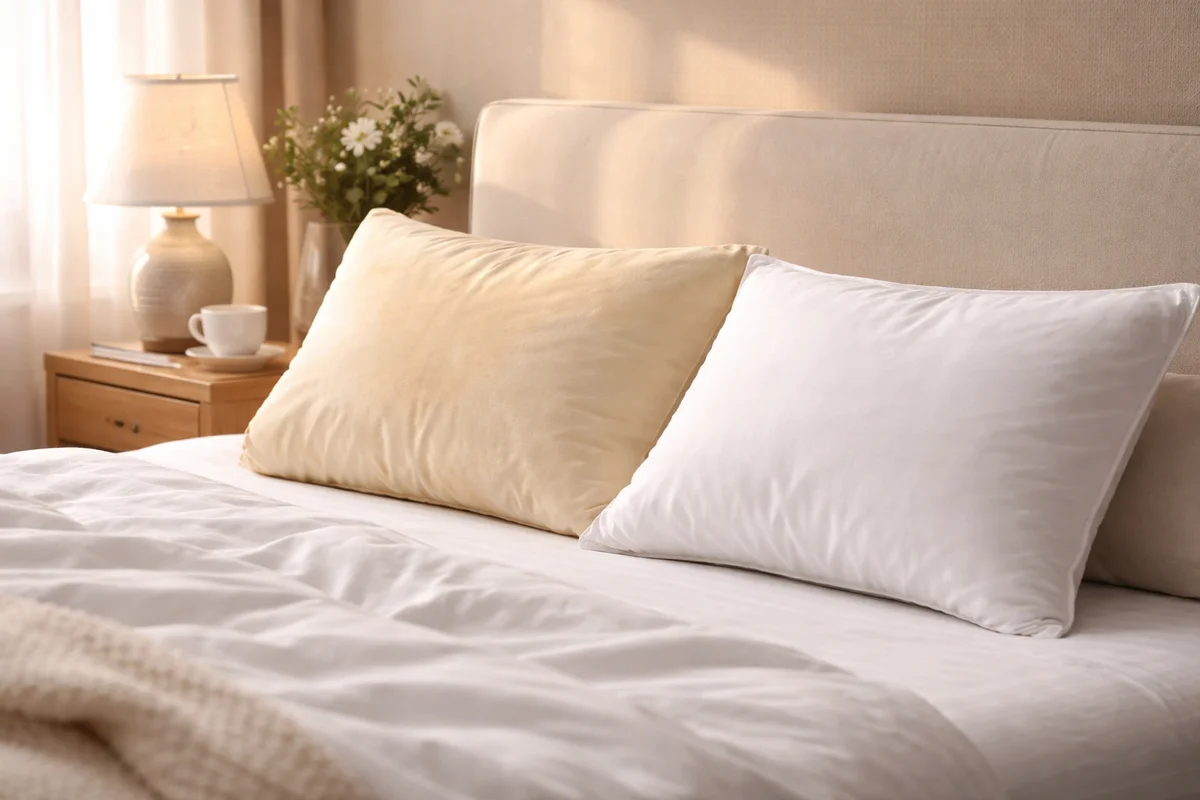
Yellowing does not mean your pillow is dirty in a careless way. It usually happens slowly through daily use.
The most common causes include:
- Sweat and moisture: Your body releases moisture every night, even in cool rooms.
- Natural body oils: Skin and hair oils soak into the fabric.
- Skincare and hair products: Lotions, creams, and serums transfer while you sleep.
- Humidity: Moist air makes fabrics hold moisture longer.
- Oxidation: Exposure to air slowly changes fabric color.
Some people notice darker stains and wonder, “Why do pillows turn brown?” This usually happens when sweat mixes with oils and dust over long periods.
It is not related to medical conditions such as “Gilbert’s syndrome yellow pillow.” In most homes, yellowing is simply a hygiene and moisture issue.
Are Yellow Pillows Bad for You
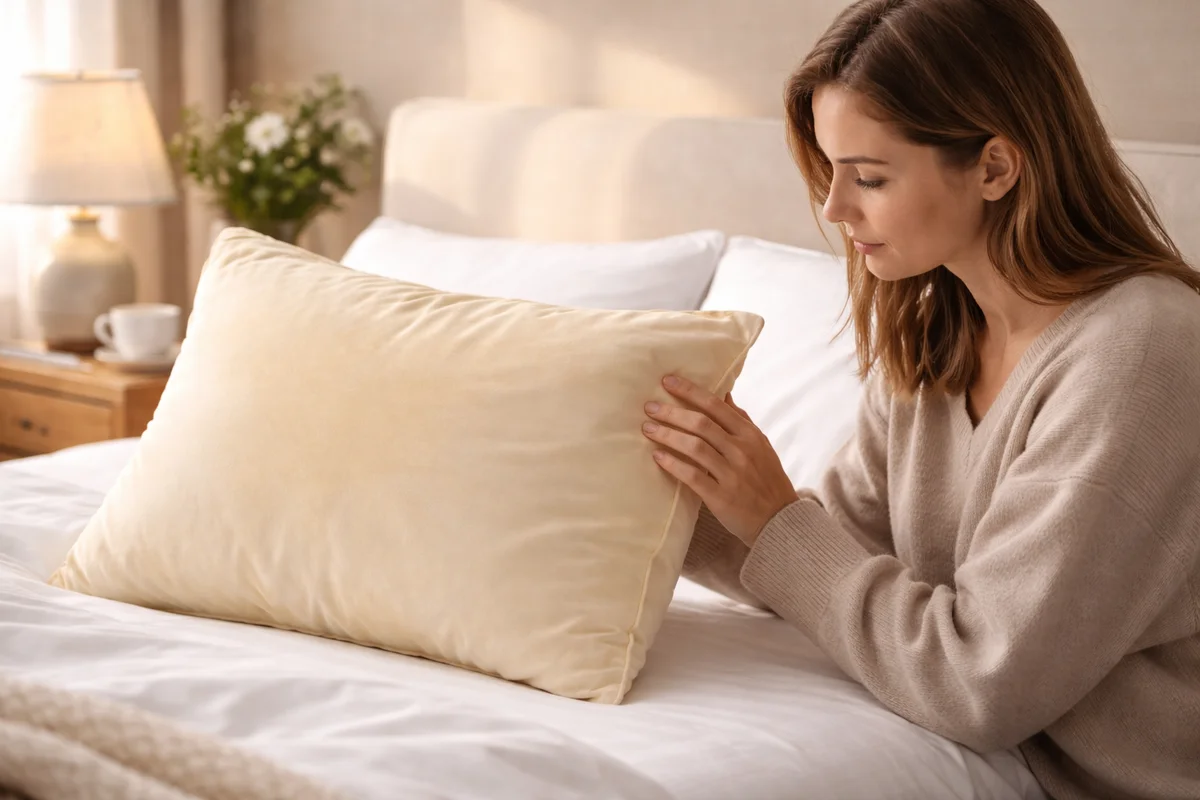
A yellow pillow does not automatically mean it is unsafe. However, discoloration often shows that sweat, oils, and allergens have built up.
Over time, unwashed pillows may contain:
- Dust mites
- Dead skin cells
- Odor-causing bacteria
- Moisture residue
This buildup may increase discomfort for people with allergies or sensitive skin. It does not guarantee illness, but keeping pillows clean can reduce risks.
If you are concerned about hygiene, this guide on whether old pillows can affect your health explains it in more detail.
Gentle note: This article is for general information only and does not replace medical advice.
How to Remove Yellow Stains from Pillows (Step-by-Step)
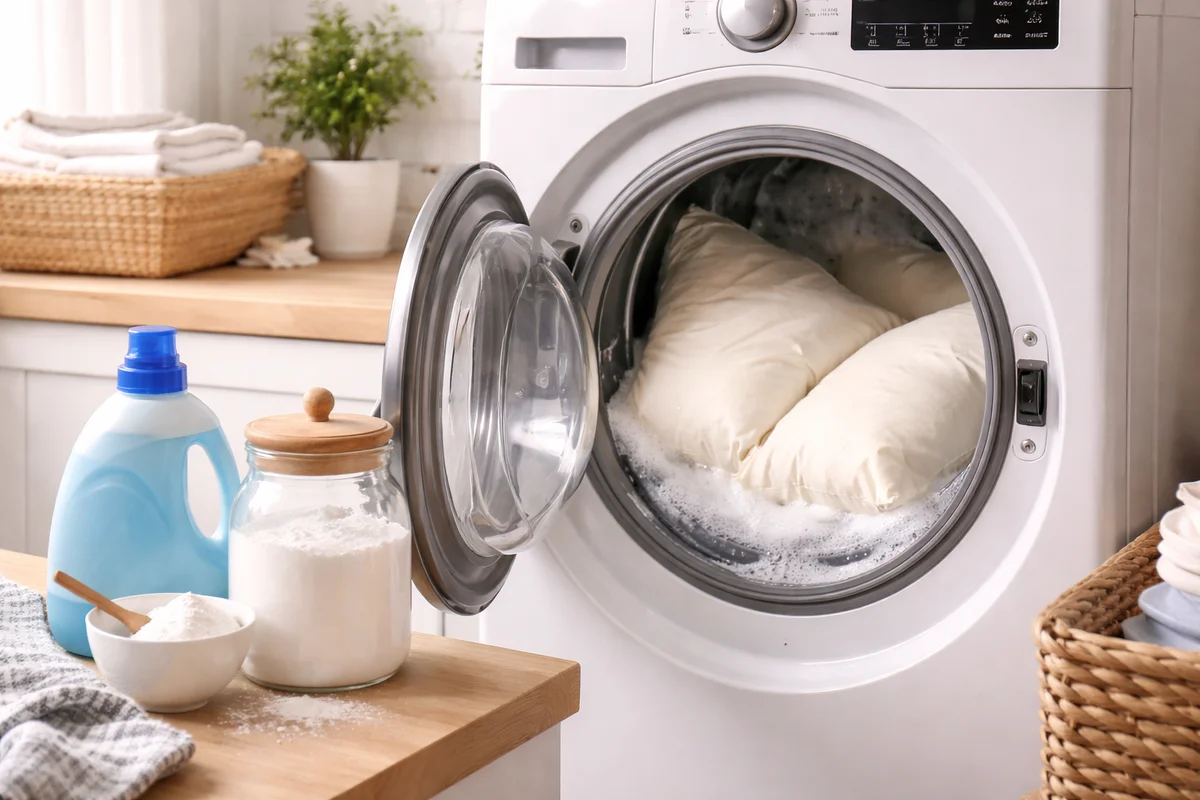
Most washable pillows can be cleaned at home with simple supplies.
What You Will Need
- Mild laundry detergent
- Baking soda
- White vinegar (optional)
- Warm water
Washing Machine Method
- Check the care label first.
- Place two pillows in the washer for balance.
- Add detergent and half a cup of baking soda.
- Wash on warm, gentle cycle.
- Run an extra rinse if possible.
For detailed instructions, see this step-by-step washing guide.
Vinegar and Baking Soda Method
If stains are stubborn, you can whiten pillows with vinegar and baking soda:
- Add half a cup of vinegar in the rinse cycle.
- Use baking soda in the main wash.
- Never mix both directly in the same compartment.
This combination helps break down oils and odor gently.
How to Clean Yellow Pillows Without a Washing Machine
If you do not have access to a washer, hand-cleaning can still work well.
Hand-Wash Method
- Fill a bathtub or large basin with warm water.
- Add mild detergent and baking soda.
- Submerge the pillow and gently squeeze.
- Soak for 30–60 minutes.
- Rinse thoroughly with clean water.
Press out water with towels. Do not twist the pillow.
If your pillow cannot be soaked, this guide on cleaning non-washable pillows may help.
After washing, proper drying matters. You can follow these tips on drying pillows without a dryer to prevent mildew.
How to Prevent Pillows from Turning Yellow Again
Prevention is easier than deep cleaning.
- Use a washable pillow protector.
- Change pillowcases every 7–10 days.
- Wash pillows every 3–6 months.
- Sleep with clean hair and skin.
- Let pillows air out weekly.
You can learn more in this guide on how often to wash pillows.
If odor develops, this article on removing pillow smells can be useful.
When to Replace a Yellowed Pillow
Sometimes, cleaning is not enough.
You may need a new pillow if:
- Stains do not fade after washing
- The pillow feels flat or lumpy
- Odors remain
- You wake up uncomfortable
Most pillows last about 1.5 to 3 years, depending on material and care.
If you are unsure what to do next, this guide on disposing of old pillows responsibly may help.
Final Thoughts from a Sleep Comfort Perspective
Yellow pillows are very common. They are not a personal failure or a hygiene mistake.
With regular care, gentle cleaning, and proper drying, most pillows can stay fresh much longer.
Think of pillow maintenance as part of your sleep routine—just like brushing your teeth before bed. Small habits make a big difference over time.
Q: Why do pillows turn yellow over time?
Ans: Pillows turn yellow mainly because sweat, body oils, moisture, and skincare products soak into the fabric during sleep. Over time, these substances oxidize and change color. Humidity and infrequent washing can speed up this process, even if you regularly change pillowcases.
Q: Should I throw away my pillow if it's yellow?
Ans: Not always. If the pillow is still supportive and the stains fade after washing, you can keep using it. However, if odors remain, the filling feels flat, or stains won’t come out, replacing it may be more comfortable and hygienic.
Q: Is it okay to sleep on a yellow pillow?
Ans: Occasional discoloration is usually harmless, but yellowing often means sweat and allergens have built up. Regular washing can reduce this. People with allergies or sensitive skin may feel more comfortable using clean, well-maintained pillows.
Q: How do I clean yellowed pillows at home?
Ans: You can wash most pillows with warm water, mild detergent, and baking soda. Adding vinegar during the rinse cycle may help remove stubborn stains. Always check the care label first and dry the pillow fully to prevent odor and mildew.
Q: What's the average lifespan of a pillow?
Ans: Most pillows last between 18 months and 3 years, depending on material and care. Regular washing, using protectors, and proper drying can extend lifespan, while flattening, odor, or discomfort usually signal it’s time for replacement.