
Have you ever woken up feeling stuffy, itchy, or simply “off” and wondered if your pillow might be part of the problem? Many people sleep on the same pillow for years without realizing what builds up inside it.
Pillows feel personal and comforting, which makes it easy to ignore small warning signs. But over time, even a high-quality pillow can collect substances that affect your health, skin, and sleep quality.
In this complete guide, I’ll explain what really happens inside old pillows, how to spot trouble early, and what you can do to protect your sleep. These insights are based on years of studying sleep comfort, hygiene habits, and real-life user experiences.
Quick Answer: An old pillow can sometimes make you feel unwell by trapping dust, sweat, skin cells, and microbes. Over time, this buildup may worsen allergies, irritate skin, or disturb sleep. Regular washing and timely replacement can greatly reduce these risks.
Why Old Pillows Can Affect Your Health
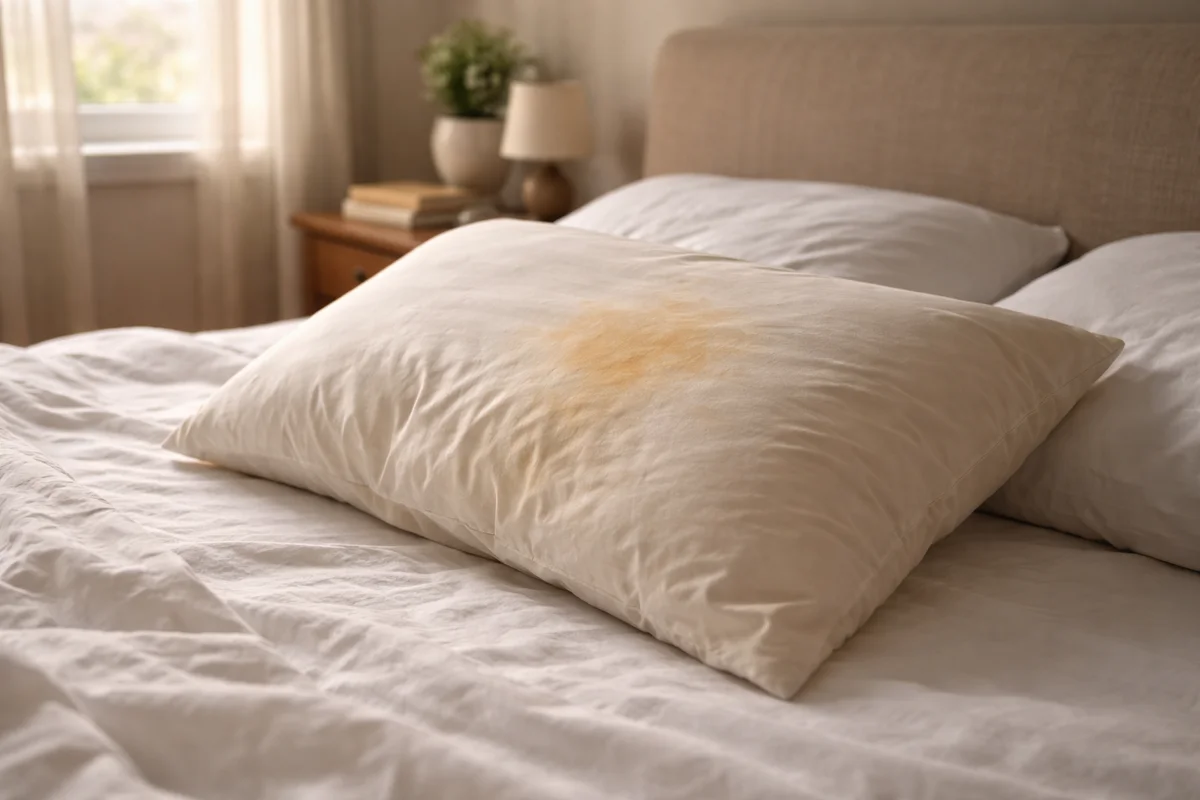
Your pillow absorbs more than you might expect. Every night, it collects sweat, oil, saliva, and microscopic skin flakes.
Over months and years, this moisture and debris create an environment where allergens and microbes can thrive.
For sensitive sleepers, this buildup may cause:
- Frequent sneezing or congestion
- Itchy or watery eyes
- Skin irritation and breakouts
- Disrupted or restless sleep
Old pillows also lose structural support. Poor neck alignment may lead to stiffness, headaches, and reduced sleep quality.
If you’ve noticed yellow stains, read why pillows turn yellow and how to clean them.
Signs Your Pillow Is No Longer Safe
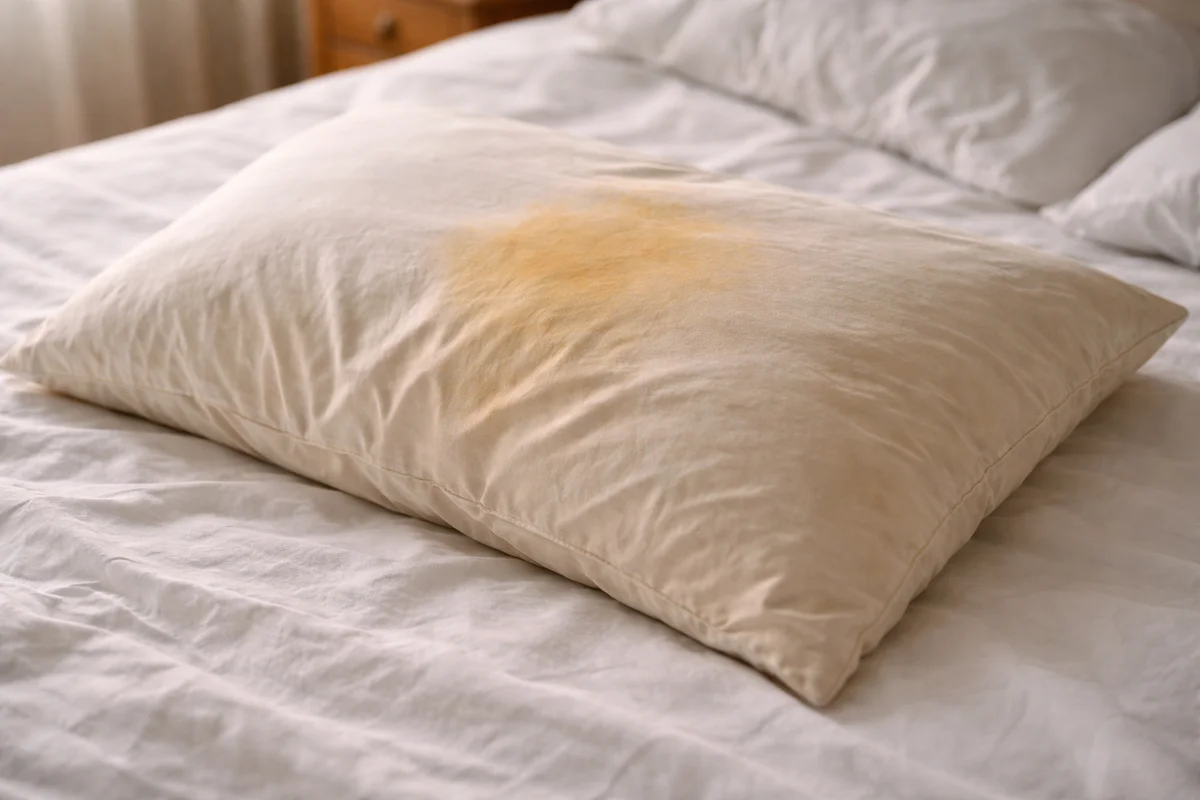
Not sure if your pillow has reached the end of its healthy lifespan? These warning signs are important to notice.
- Persistent odors: Musty or sour smells that don’t fade
- Visible stains: Yellow or brown patches
- Loss of support: Remains flat after folding
- Skin problems: Breakouts on one side of the face
- Allergy flare-ups: Sneezing or congestion at night
If your pillow feels limp, see how to fluff a pillow by hand.
What Lives Inside a Dirty Pillow
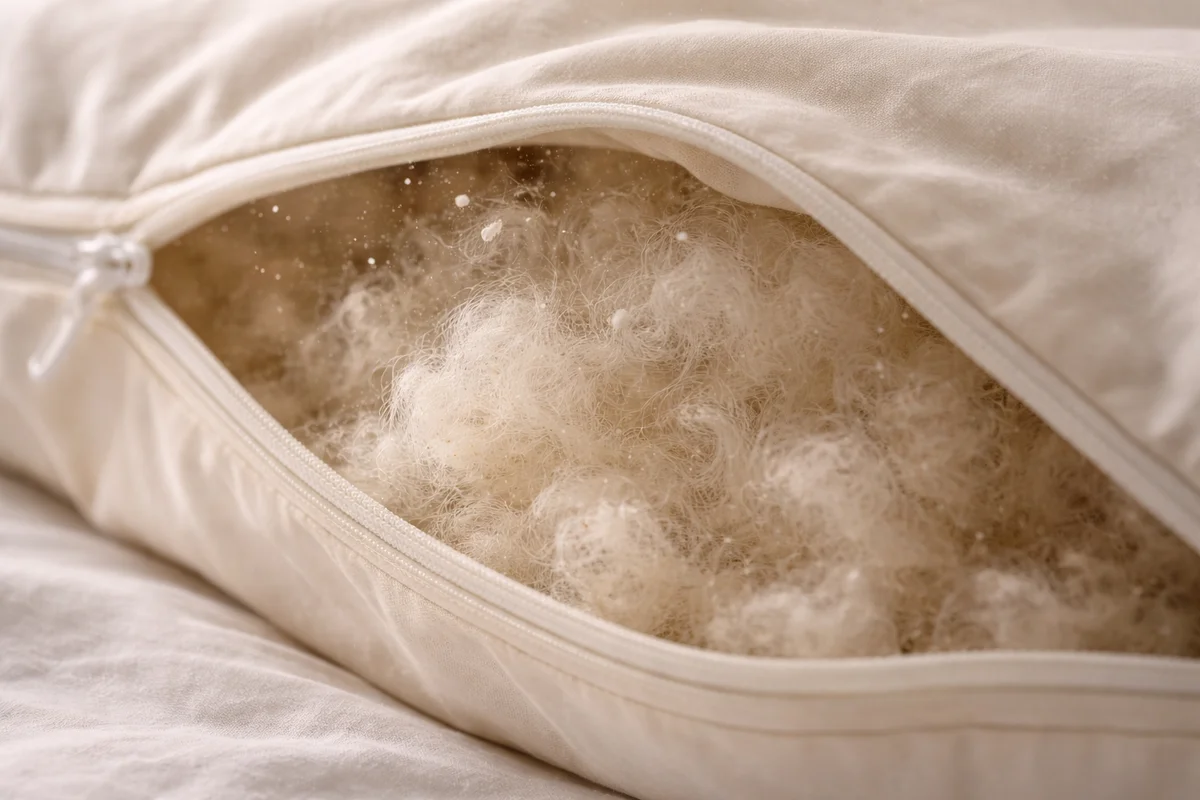
Even clean-looking pillows may hide invisible contaminants.
Over time, pillows may collect:
- Dust mites and waste particles
- Bacteria from sweat and saliva
- Fungal spores in humid climates
- Dead skin cells and oils
While these rarely cause serious illness, they can irritate airways and skin in sensitive people.
If odors appear after washing, read how to get smell out of pillows after washing.
Proper drying is essential. See drying pillows without a dryer.
Can Washing Make an Old Pillow Safe Again?
In many cases, yes. Proper washing removes sweat, oils, and allergens.
However, results depend on pillow type and age.
Synthetic and feather pillows usually respond well. Memory foam and latex require special care.
Follow this washing machine pillow tutorial and learn how often you should wash your pillows.
Important: Washing improves hygiene but cannot repair structural damage.
When to Replace vs. Revive Your Pillow
Sometimes cleaning is enough. Other times, replacement is healthier.
Consider Washing If:
- The pillow is under two years old
- Support remains good
- Odors are mild
Consider Replacing If:
- It stays flat and lumpy
- Smells return quickly
- It’s over three years old
- Allergy symptoms persist
See practical ideas for old pillows.
Replacing a worn pillow is an investment in better sleep and long-term comfort.
Frequently Asked Questions
Q: Can an old pillow really make you sick?
Ans: An old pillow can sometimes worsen allergies, skin irritation, or poor sleep because it traps dust, sweat, and microbes. While it rarely causes serious illness, it may contribute to discomfort. Washing regularly and replacing worn pillows helps reduce these risks.
Q: How do I know if my pillow is bad?
Ans: Signs of a bad pillow include strong odors, permanent stains, loss of shape, neck discomfort, and increased sneezing or breakouts. If it stays flat when folded or feels lumpy, it may no longer support healthy sleep.
Q: What happens if you sleep on a dirty pillow?
Ans: Sleeping on a dirty pillow may expose you to dust mites, bacteria, and oils. This can irritate skin, worsen allergies, and disturb sleep quality. Regular washing and clean pillowcases reduce these effects.
Q: Can washing make an old pillow safe again?
Ans: Washing removes much of the dirt and allergens from many pillows, especially synthetic or feather types. However, very old or damaged pillows may not fully recover. Replacement is often better.
Q: How often should I replace my pillow?
Ans: Most experts suggest replacing pillows every two to three years. If your pillow smells, stays flat, or causes discomfort, it may need replacing sooner.
Final Thoughts: Protect Your Sleep with Clean Pillows
Your pillow plays a major role in sleep quality and daily comfort.
Regular washing, proper drying, and timely replacement help prevent many hygiene-related problems.
If your pillow feels uncomfortable, smells unpleasant, or causes irritation, it may be time for change.
Healthy pillows support healthy sleep — and healthy sleep supports a better life.