
You unzip your pillow cover, check the label, and see the words: “Do Not Wash.” That sinking feeling is real.
You want a clean, fresh sleep surface. But you’re worried that adding water could ruin the foam, destroy the shape, or cause hidden mold. Many memory foam, latex, and specialty pillows simply cannot survive a full wash cycle.
The good news? You can still clean and refresh them safely.
In this complete guide, I’ll show you practical, low-moisture cleaning methods that protect delicate pillow materials while improving hygiene. These steps are based on real-life pillow care practices and safe home maintenance principles.
Quick answer: To clean a pillow that cannot be washed, air it out regularly, vacuum both sides to remove dust and allergens, sprinkle baking soda to absorb odors, and spot clean stains with mild soap and minimal moisture. Disinfect gently using controlled steam or sunlight, and always allow the pillow to dry fully before reuse.
Table of Contents
- Check the Care Label First
- Dry Cleaning Methods for Non-Washable Pillows
- Spot Cleaning Stains and Odors
- How to Disinfect Pillows Without Washing
- Mold, Lice, and When to Replace
Check the Care Label First (Avoid Permanent Damage)
Before using any cleaning method, always read the care label carefully.
Some pillows say “Do Not Machine Wash” but allow light hand cleaning. Others, especially memory foam and natural latex, should avoid soaking completely.
Why this matters: trapped moisture inside dense foam can create mildew within 24–48 hours.
If your pillow allows gentle washing, review this detailed washing guide for comparison. If not, stick strictly to low-moisture methods below.
Two minutes spent reading the label can save you from permanent structural damage.
Dry Cleaning Methods for Non-Washable Pillows
“Dry cleaning” at home simply means cleaning without soaking the pillow. These methods are safe for foam, latex, and specialty fills.
1. Airing Out (Moisture Control)
Place your pillow in a shaded, well-ventilated area. Fresh airflow reduces trapped humidity and stale odors.
Do this every 2–4 weeks, especially if you sweat at night.
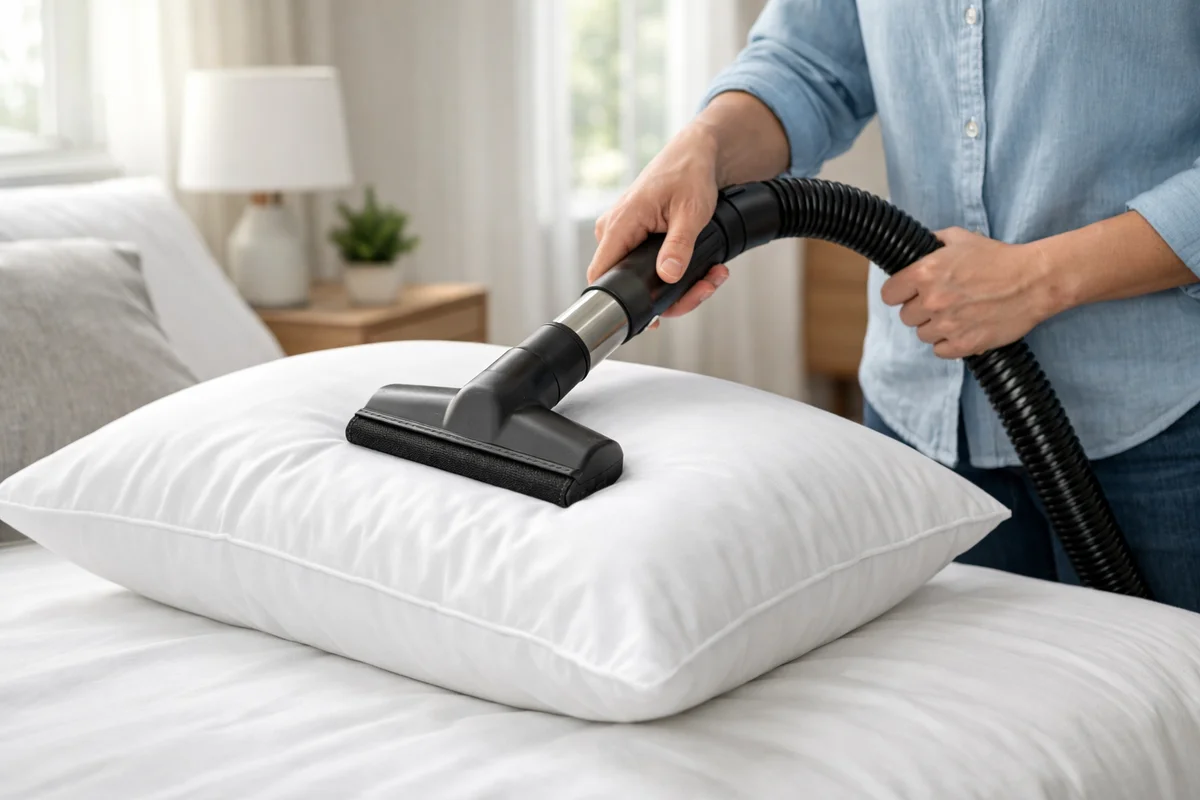
2. Vacuuming (Allergen Removal)
Use an upholstery attachment and gently vacuum both sides.
This removes:
- Dust mites
- Skin flakes
- Hair particles
- Surface debris
If long-term hygiene concerns you, this article on old pillow health risks explains why routine maintenance matters.
3. Baking Soda Deodorizing (Odor Neutralizing)
Sprinkle a light, even layer of baking soda over the surface. Let it sit for 30–60 minutes.
Then vacuum thoroughly.
This naturally absorbs sweat-based odors without adding moisture.
Spot Cleaning Stains and Odors (Low-Moisture Method)
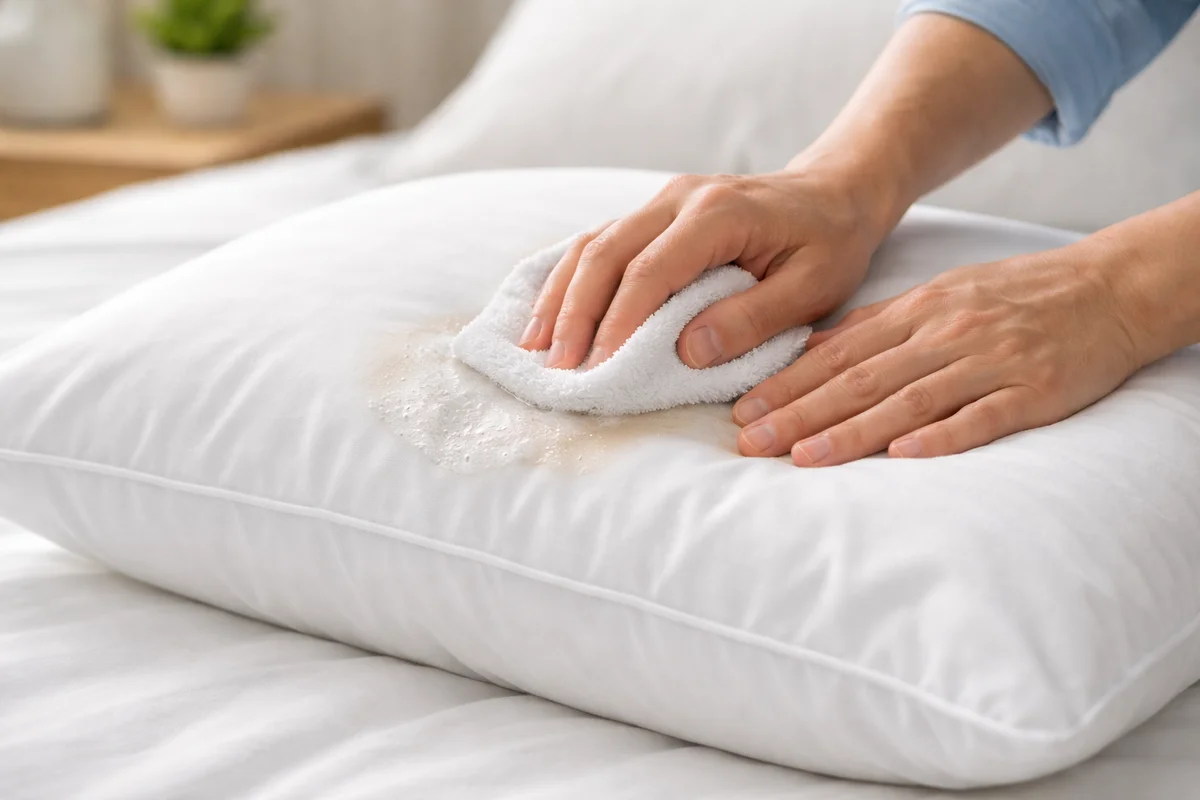
Yellow spots or minor stains usually do not require deep cleaning. Spot treatment is safer and more controlled.
Step-by-Step Safe Spot Cleaning
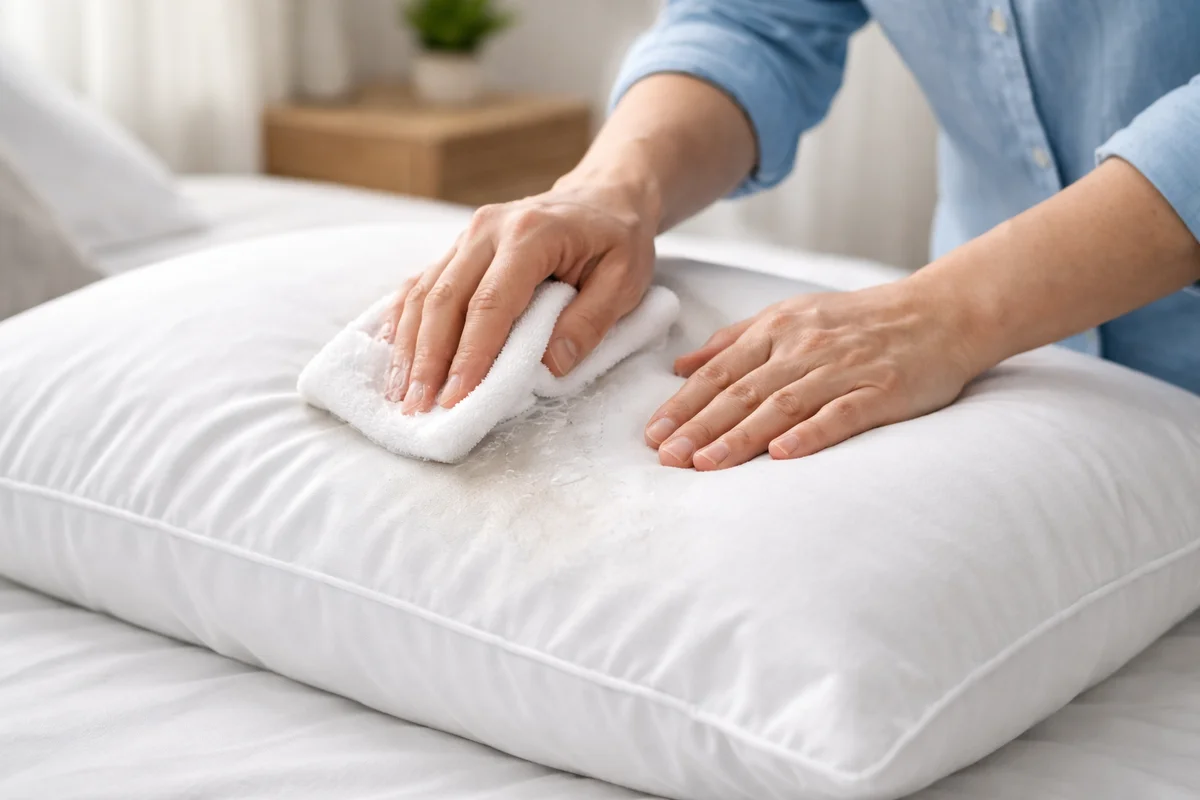
- Mix a few drops of mild detergent with warm water.
- Dampen (not soak) a clean cloth.
- Blot gently — never scrub aggressively.
- Wipe again with plain water to remove soap residue.
- Press with a dry towel to remove moisture.
Important: Excess water is the biggest risk factor for foam damage.
If yellowing happens often, this guide on why pillows turn yellow explains the causes.
For lingering smells, review these tips on removing pillow odors.
How to Disinfect Pillows Without Washing
Disinfecting reduces germs and pests — it does not mean sterilizing.
Steam Cleaning (Controlled Exposure)
Some memory foam pillows tolerate light steam. Hold a handheld steamer several inches away.
Never saturate the surface. Follow immediately with full air drying.
Sunlight Treatment (Natural UV Exposure)
Place the pillow in direct sunlight for 2–3 hours.
Rotate halfway for even exposure.
Sunlight may help reduce bacteria and mild odor buildup.
Protective Covers (Prevention Strategy)
Use a breathable, removable protector to reduce deep contamination.
Pair this with regular fluffing using methods from this hand-fluffing guide.
Note: For severe contamination, professional cleaning or replacement may be safer.
Mold, Lice, and When to Replace Instead of Clean
Some problems go beyond surface cleaning.
Mold Growth Warning
Black, green, or fuzzy patches with a strong musty smell may indicate mold.
Surface mold can sometimes be treated with diluted vinegar. However, if mold has penetrated inside the foam, replacement is typically safer for indoor air quality.
Lice Concerns
Seal the pillow in a plastic bag for two weeks to disrupt the lice life cycle.
Follow with sunlight exposure and vacuuming.
Replace the Pillow If:
- Odor returns quickly after cleaning
- The interior stays damp
- Foam feels brittle or crumbly
- Neck support is lost
Learn proper drying habits from this air-drying guide to prevent future problems.
For disposal ideas, see what to do with old pillows.
Simple Maintenance Habits That Make Cleaning Easier
- Use a washable pillowcase and protector
- Air pillows weekly
- Avoid sleeping on wet hair
- Rotate pillows monthly
- Vacuum lightly every 2–4 weeks
For a complete hygiene routine, this guide on how often to wash pillows offers a practical schedule.
Consistent light maintenance reduces the need for aggressive cleaning later.
Q: How do you clean non-washable pillows at home?
Ans: You can clean non-washable pillows by airing them out, vacuuming dust, and using baking soda to absorb odors. For stains, gently spot clean with a damp cloth and mild soap. Always avoid soaking the pillow and let it dry fully before use.
Q: Can you steam clean pillows that cannot be washed?
Ans: Light steam may help reduce odors and germs on some pillows, especially memory foam and latex. Keep the steamer several inches away and avoid excess moisture. Always check the care label first, as too much steam can damage certain materials.
Q: How do you disinfect pillows without washing them?
Ans: You can disinfect pillows without washing by using sunlight, light steam, and thorough vacuuming. These methods may help reduce bacteria and pests. For added protection, use a pillow protector and clean pillowcases regularly to limit buildup.
Q: Should I throw away a pillow with mold?
Ans: If mold is deep inside the pillow or keeps returning after cleaning, replacing it is usually safer. Surface mold can sometimes be wiped away, but hidden growth may affect air quality. When in doubt, choosing a new pillow is often the healthier option.
Q: How often should I clean a pillow that cannot be washed?
Ans: Most non-washable pillows benefit from light cleaning every two to four weeks. This includes airing, vacuuming, and deodorizing. Spot clean stains as needed. Regular maintenance helps extend the pillow’s life and keeps your sleep environment fresher.