
Over time, pillows quietly collect sweat, body oils, dust mites, dead skin cells, and moisture. Even if they look clean on the outside, the inside can hold buildup that affects freshness, comfort, and hygiene.
Many people avoid washing pillows because they worry about ruining the shape or damaging the filling. The good news is: most pillows can be safely washed in a washing machine — if you follow the correct method.
In this guide, I’ll walk you through exactly how to wash pillows in a washing machine the safe way, based on real home-care experience and gentle fabric-care principles that protect both structure and cleanliness.
Can All Pillows Be Washed in a Machine?
No. Some pillows handle water well, while others can be permanently damaged.
| Pillow Type | Machine Wash Safe? | Dryer Safe? | Special Notes |
|---|---|---|---|
| Polyester / Microfiber | Yes | Yes (Low heat) | Most durable option |
| Down / Feather | Yes (Gentle) | Yes (Low heat) | Needs thorough drying |
| Memory Foam | No | No | Spot clean only |
| Latex | No | No | Water may break structure |
| Buckwheat | No | No | Remove hulls before cleaning cover |
Checking the care label is the safest first step. Manufacturers design fillings differently, and some use glued layers that should never be soaked.
Check Your Pillow Type First
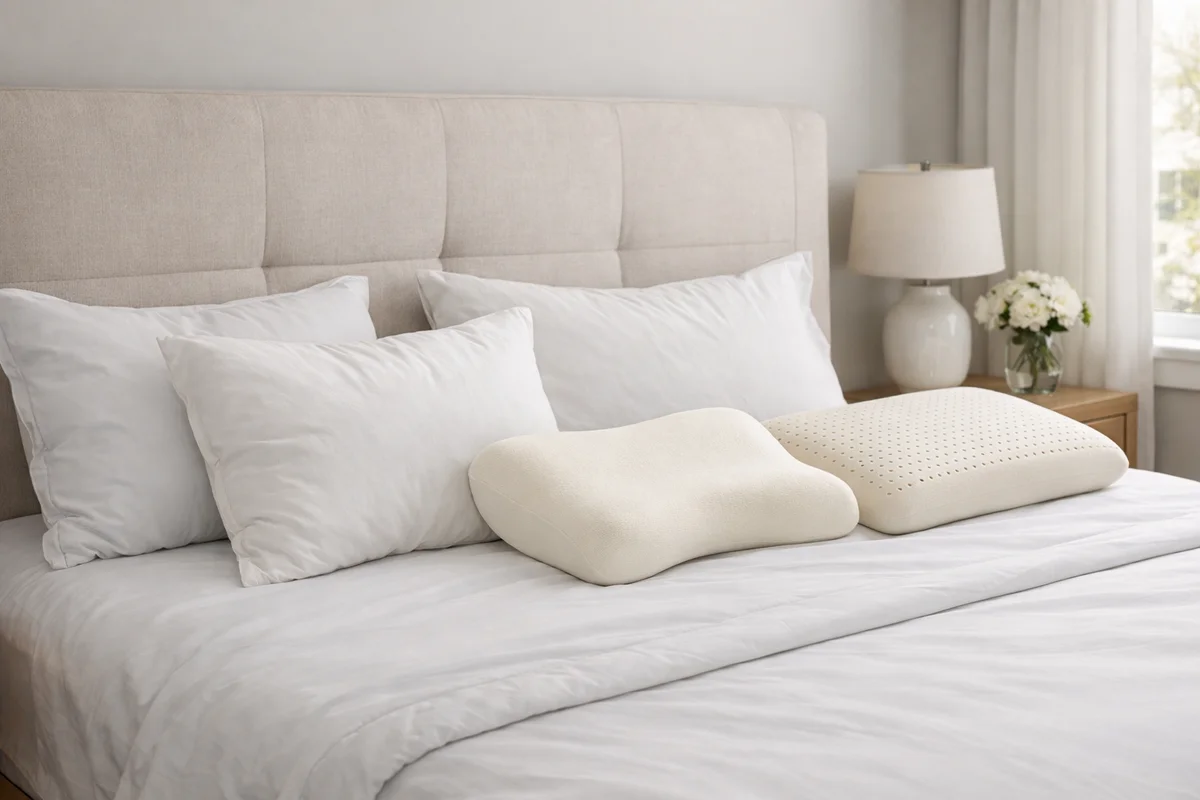
Before putting any pillow in the washer, identify its filling material. Not all pillows respond to water the same way.
Usually machine-washable
- Polyester or microfiber pillows
- Down and feather pillows (with care)
- Some bamboo-blend pillows
Usually not machine-washable
- Memory foam pillows
- Latex pillows
- Buckwheat or hull-filled pillows
If you use foam, follow this memory foam cleaning guide instead. For feather-filled pillows, see this feather pillow washing guide.
When in doubt, hand washing or spot cleaning is safer than risking structural damage.
Step-by-Step: Washing Pillows in a Machine
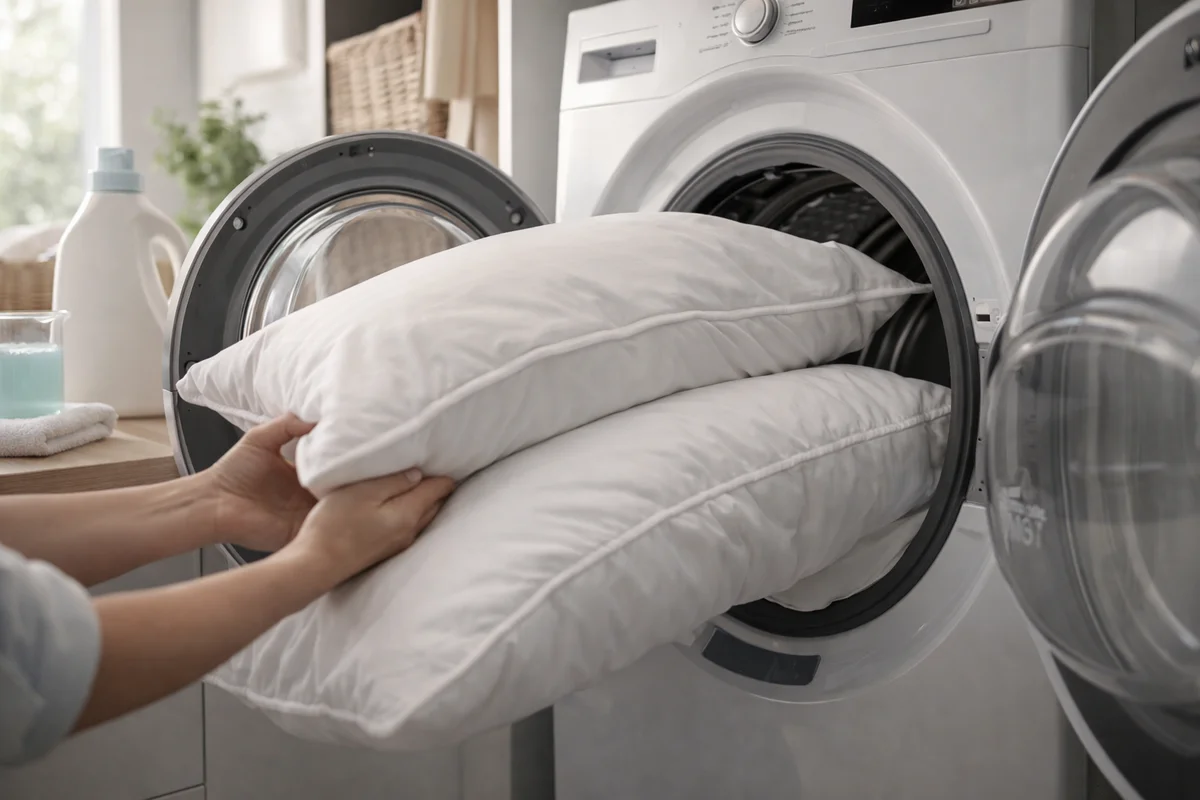
Once you confirm your pillow is machine-safe, follow these structured steps:
- Remove covers and protectors. Wash separately.
- Wash two pillows together. This keeps the drum balanced.
- Use mild detergent only. Avoid bleach and fabric softener.
- Select a gentle cycle. Cold or warm water works best.
- Choose extra rinse. Removes soap residue.
- Use low or medium spin. High spin can break internal fibers.
Whether you use a front-loader, top-loader, or high-efficiency washer, the principle remains the same: gentle agitation, proper rinsing, and balanced load.
Most households wash pillows every three to four months. Learn more in this guide on how often to wash pillows.
Removing Yellow Stains and Odors
Yellow stains typically form from sweat, body oils, and humidity buildup.
Natural whitening method
- ½ cup baking soda
- 1 cup white vinegar (add during rinse)
- Mild liquid detergent
Add baking soda with detergent. Add vinegar during the rinse cycle. This combination helps neutralize odor and loosen residue without harsh chemicals.
For deeper discoloration, see this guide on why pillows turn yellow and how to clean them.
If odor remains after washing, follow these tips for removing pillow smells after washing.
Drying Pillows Without Damage (Most Important Step)
Improper drying is the number one cause of mildew, clumping, and odor.
Dryer method
- Use low heat or air dry setting
- Add two clean tennis balls to prevent clumping
- Pause and fluff every 20–30 minutes
- Dry until fully dry inside, not just surface dry
Air-drying method
- Place in indirect sunlight if possible
- Flip regularly for airflow
- Allow 24–48 hours
If you don’t use a dryer, follow this guide on drying pillows without a dryer.
After drying, you may want to fluff your pillow by hand to restore shape and airflow.
When to Hand Wash or Skip the Machine
Machine washing is not always the safest choice.
- Foam or latex materials
- Pillows with glued internal layers
- Very old or fragile pillows
- Pillows that lose structure easily
In these cases, gentle soaking and pressing (never wringing) helps preserve shape. For sealed pillows, see this guide on cleaning non-washable pillows.
Common Mistakes That Ruin Pillows
- Using too much detergent
- Skipping extra rinse
- Overloading the washer
- Drying on high heat
- Storing before fully dry
Avoiding these small mistakes extends pillow lifespan significantly.
Extra Safety and Hygiene Tips
- Use a washable pillow protector
- Change pillowcases weekly
- Let pillows air out monthly
- Avoid sleeping on damp pillows
- Replace pillows every 1.5–3 years
If you experience allergies, breakouts, or breathing issues, dirty pillows may contribute. This article on old pillows and health risks explains more.
Note: If you have asthma, allergies, or skin conditions, consult a professional before using strong cleaning products.
Final Thoughts
Washing pillows in a machine is safe for most synthetic and down types when done gently. The key factors are balance, mild detergent, proper rinsing, and complete drying.
Clean pillows support better sleep hygiene, reduce odor buildup, and help maintain comfort. With the right method, you protect both your pillow and your rest.
Q: Is it safe to wash pillows in the washing machine?
Ans: Yes, most synthetic and down pillows can be safely washed in a washing machine using a gentle cycle, mild detergent, and low heat. Always check the care label first. Avoid machine washing memory foam or latex pillows, as water may damage their structure.
Q: Can you put pillows in the washer and dryer?
Ans: Many pillows can go in both the washer and dryer if they are made from polyester or down. Use low heat, gentle cycles, and dry them completely. Adding tennis balls helps prevent clumping and keeps pillows fluffy.
Q: How do you get yellow stains out of pillows?
Ans: Yellow stains can often be reduced by washing with mild detergent and baking soda, then adding white vinegar during the rinse. This helps break down sweat and oil buildup. For heavy stains, repeat the process or soak first.
Q: Is it better to hand wash or machine wash pillows?
Ans: Machine washing is usually fine for synthetic and feather pillows when done gently. Hand washing is better for delicate, foam, or aging pillows. Always follow the manufacturer’s care instructions for best results.
Q: How often should pillows be washed in a washing machine?
Ans: Most people benefit from washing pillows every three to four months. If you sweat heavily, have allergies, or live in humid areas, washing them more often may help maintain freshness and comfort.